Saturday, October 3, 2026

Saturday, October 3, 2026
* All product/brand names, logos, and trademarks are property of their respective owners.
Every manufacturing unit, whether small, medium, or large, depends on the right equipment to run smoothly and stay competitive. A factory cannot rely on manpower alone when speed, consistency, safety, and product quality are all on the line. From producing parts and assembling products to moving materials and monitoring operations, industrial equipment forms the backbone of daily manufacturing work. Without the right machines and systems in place, even a well-planned production setup can face delays, waste, higher costs, and safety risks.
In today’s fast-moving industrial world, manufacturers are under constant pressure to produce more in less time while maintaining quality standards. This is why choosing essential industrial equipment is not just about buying machines. It is about building a reliable system that supports production, protects workers, improves workflow, and allows future growth. A modern manufacturing unit needs a mix of core production machinery and supporting equipment that keeps every process connected and efficient.
Some equipment is directly involved in shaping, cutting, assembling, or producing goods. Other tools work in the background by handling raw materials, maintaining workplace safety, and helping management track performance. Together, these systems create a strong foundation for a productive factory environment. In this blog, we will look at the most essential industrial equipment every manufacturing unit needs and explain why each one plays such an important role in smooth and successful operations.
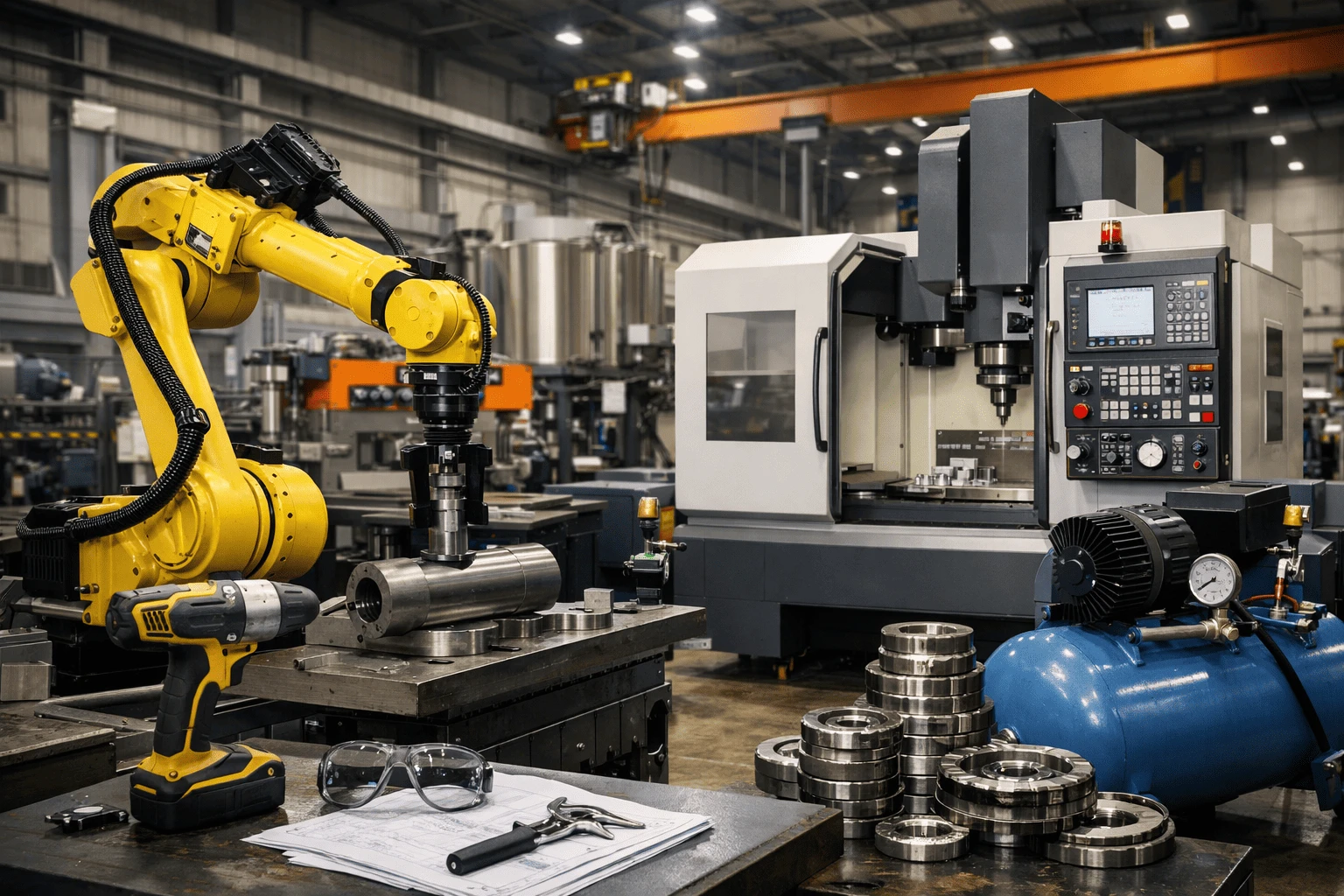
The heart of any manufacturing unit is its core production equipment. These are the machines that directly take part in making, shaping, assembling, or finishing products. Without them, production would be slow, inconsistent, and heavily dependent on manual labor. The right industrial machines help factories increase output, reduce errors, and maintain product quality from start to finish. For both new and established manufacturers, investing in the right production equipment is one of the most important business decisions.
CNC machines are among the most valuable tools in modern manufacturing. CNC stands for Computer Numerical Control, which means the machine follows programmed instructions to cut, drill, shape, or mill materials with high precision. These machines are widely used in metalworking, automotive parts production, electronics, and even furniture manufacturing. Their biggest strength is accuracy. When a manufacturing unit needs the same product made repeatedly with very little variation, CNC machines do the job extremely well.
Automated manufacturing systems also save time and reduce human error. Instead of depending fully on manual operation, factories can use programmed machines to complete repetitive tasks faster and more consistently. For example, a parts manufacturer in the UK may use automated CNC systems to produce machine components in large volumes, while an electronics factory may depend on automation for circuit board handling and drilling.
Cutting and fabrication equipment is another must-have in many manufacturing units. Machines like laser cutters, plasma cutters, hydraulic presses, and bending machines are used to shape raw materials into usable forms. These are especially important in industries such as steel fabrication, construction materials, automotive production, and appliance manufacturing.
For example, laser cutting machines are popular because they offer clean, precise cuts and help reduce material waste. Hydraulic presses are useful for shaping metal sheets and heavy materials into exact forms. When manufacturers choose the right cutting and fabrication tools, they improve both speed and final product quality.
Assembly line equipment helps bring all parts of production together. Conveyor belts, automated feeders, fastening tools, and packaging line machinery are common examples. These machines make it easier to move products from one stage to the next without delays. In industries like food processing, electronics, and automobile manufacturing, assembly line systems are essential for managing high production volume.
A well-designed assembly line also improves workflow and reduces worker fatigue. Instead of carrying items manually between workstations, products move through an organized process. This creates better efficiency, smoother coordination, and faster delivery times.
While core production machines get most of the attention, supporting equipment is just as important for the success of any manufacturing unit. A factory may have advanced machinery for production, but without proper material movement, safety systems, and monitoring tools, operations can quickly become disorganized and inefficient. Supporting equipment helps connect every part of the manufacturing process. It keeps materials flowing, protects workers, reduces downtime, and allows managers to maintain control over daily operations.
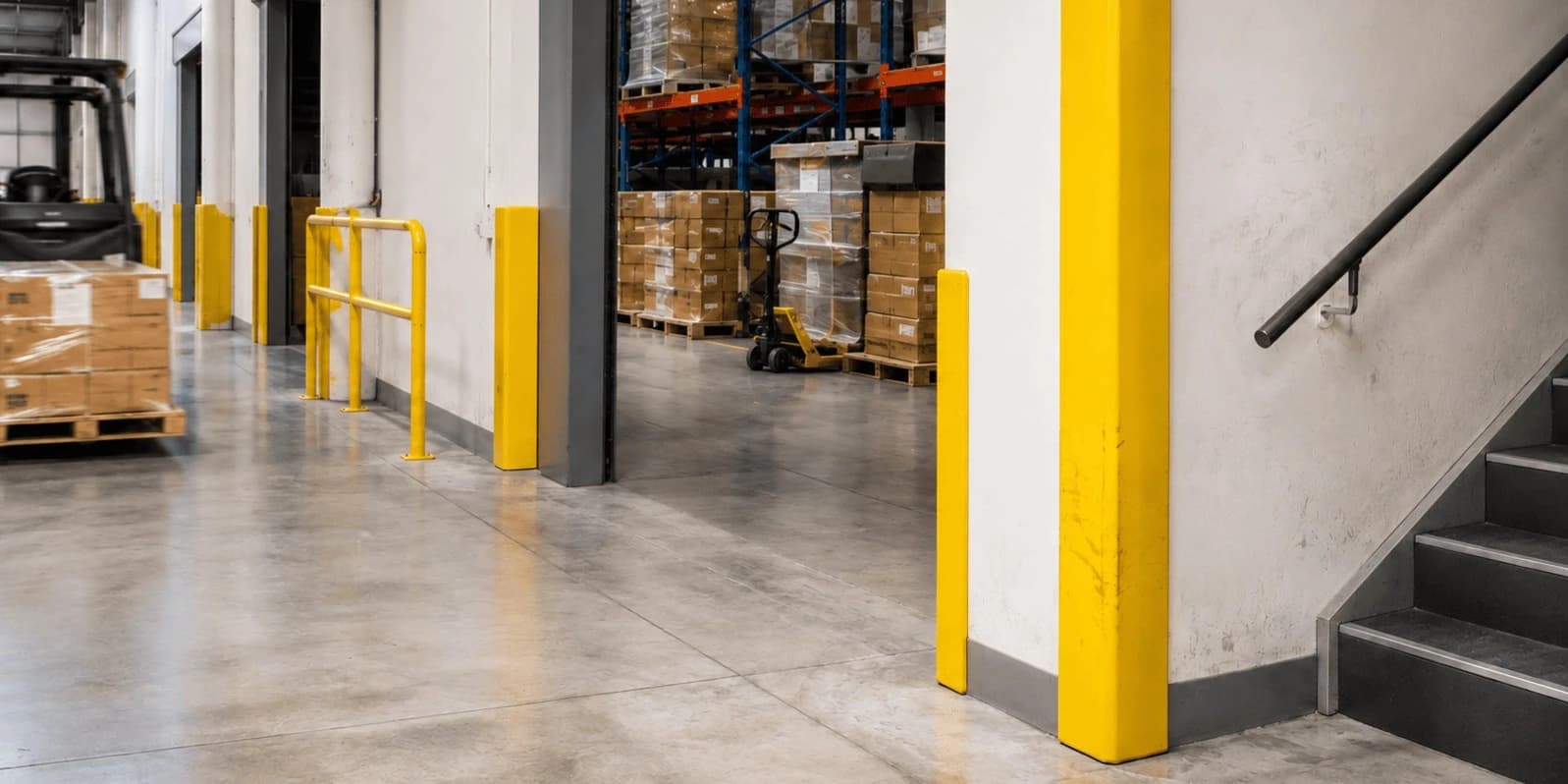
Material handling equipment is essential in every manufacturing environment because raw materials, semi-finished goods, and finished products need to move smoothly from one area to another. Equipment such as forklifts, pallet jacks, hoists, conveyor belts, and storage racks makes this possible. Without these tools, factories often face delays, damaged materials, and unnecessary physical strain on workers.
For example, a packaging factory may use conveyor belts to move products between filling, sealing, and boxing stations, while a heavy engineering plant may rely on forklifts and hoists to transport metal parts safely. In both local and international manufacturing units, efficient material handling saves time and helps maintain an organized workflow. It also improves inventory control because goods are easier to track and store when movement systems are properly designed.
Safety equipment is not optional in manufacturing. Every factory needs systems and tools that protect workers and reduce the risk of accidents. This includes personal protective equipment such as gloves, helmets, goggles, and safety shoes, along with machine guards, emergency stop systems, fire extinguishers, ventilation systems, and first aid stations. These tools help create a safer environment and support compliance with workplace regulations.
Maintenance equipment is equally important because machines need regular care to perform well over time. Tools for inspection, lubrication, repair, and preventive maintenance help reduce breakdowns and avoid expensive production stops. A manufacturing unit that ignores maintenance often faces unexpected failures, poor output quality, and rising repair costs. Regular upkeep extends equipment life and keeps operations stable.
Modern factories are increasingly using automation and monitoring systems to improve performance. These include IoT sensors, robotic arms, control panels, machine monitoring software, and real-time data dashboards. Such systems help manufacturers track output, identify delays, reduce waste, and respond quickly when a problem appears.
For instance, a smart manufacturing unit may use sensors to measure machine temperature or vibration and detect issues before a breakdown happens. Robotics can handle repetitive tasks like sorting, welding, or packaging with more speed and consistency. These tools are especially useful for manufacturers planning long-term growth because they support better decision-making and higher efficiency. In a competitive market, automation and monitoring systems can make a major difference in productivity and cost control.
Setting up a successful manufacturing unit requires more than just skilled workers and raw materials. The real foundation of any efficient factory lies in the industrial equipment that supports production and day-to-day operations. From core production machinery like CNC machines and fabrication tools to supporting systems such as material handling equipment and automation technology, each piece of equipment plays an important role in keeping manufacturing processes smooth and reliable.
Production machines are responsible for shaping, assembling, and creating products with precision and consistency. These tools help manufacturers maintain quality while increasing output and reducing manual errors. At the same time, supporting equipment ensures that materials move efficiently across the facility, workers remain safe, and machines operate without unexpected downtime. When these systems work together, they create a balanced production environment where efficiency, safety, and productivity can thrive.
Modern manufacturing units are also moving toward smarter technologies such as automation systems and real-time monitoring tools. These technologies allow factories to track performance, identify issues quickly, and optimize production processes. Businesses that invest in the right equipment today position themselves for long-term growth, better product quality, and stronger competitiveness in the global market.
In the end, choosing the right industrial equipment is not just about filling a factory floor with machines. It is about building a reliable manufacturing ecosystem that supports productivity, protects workers, and allows businesses to scale operations when demand grows. Whether you are launching a new manufacturing unit or upgrading an existing one, investing in essential industrial equipment is a key step toward sustainable and efficient production.

Hi, I’m Ahmed, a professional content writer and SEO specialist. I help businesses, brands, and websites create clear, engaging, and search-friendly content that attracts the right audience and drives results.
With a strong understanding of SEO, keyword research, blog writing, website content, and content strategy, I craft content that is not only well-written but also optimized to perform on search engines. My goal is to turn ideas into powerful words that build trust, improve visibility, and support business growth.
Whether you need blog posts, website copy, product descriptions, SEO articles, or content optimization, I can help create content that connects with readers and supports your online goals.
Corner damage is one of those problems that seems minor until it isn't. A dented plaster edge here,
29 August 2026
If you're purchasing, operating, or maintaining heavy equipment, you likely have heard phrases such
18 August 2026
Buying large quantities of SMT-equipped feeders is distinct from purchasing only a few spares. If yo
12 August 2026
Be the first to share your thoughts
No comments yet. Be the first to comment!
Share your thoughts and join the discussion below.