Wednesday, October 14, 2026

Wednesday, October 14, 2026
* All product/brand names, logos, and trademarks are property of their respective owners.
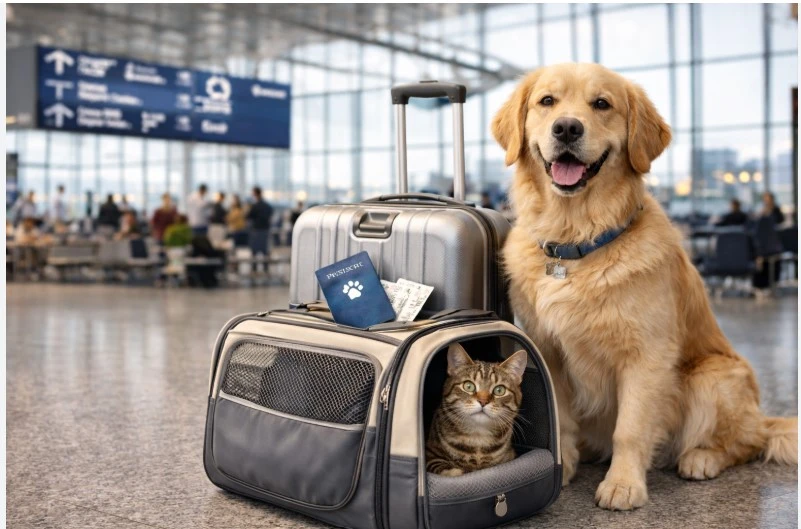
Quick answer: Pet relocation to Dubai requires an ISO-compliant microchip, up-to-date vaccinations (including a Rabies vaccine), a valid Rabies titer test, and a UAE import permit from the Ministry of Climate Change and Environment (MOCCAE). All pets entering the UAE must arrive as manifested cargo, and certain dog breeds are restricted from entry.
Moving to the United Arab Emirates requires significant logistical planning, and bringing your furry companions along adds another layer of complexity. Dubai is becoming increasingly accommodating to animals, with new dog parks, pet-friendly cafes, and specialized veterinary clinics opening across the city. Navigating the legal and medical requirements to get your animals there safely demands careful attention to detail.
A successful pet relocation to Dubai involves coordinating with government agencies, commercial airlines, and accredited veterinarians. Missing a single vaccination deadline or failing to secure the correct government paperwork can lead to denied entry or unexpected delays at the border. Families relocating to the UAE must start this preparation process months in advance to ensure a seamless journey for their animals.
This comprehensive guide details the exact steps required to move your dog or cat to the UAE. You will learn about mandatory health examinations, the import permit application process, and airline cargo policies, giving you the specific knowledge needed to manage this international transition with confidence.
The United Arab Emirates maintains strict biosecurity laws to prevent the introduction of animal diseases. The Ministry of Climate Change and Environment (MOCCAE) governs these regulations, and compliance is non-negotiable for all incoming animals.
Before any medical procedures or tests occur, your pet must be fitted with an ISO-compliant (15-digit) microchip. This microchip acts as the animal's permanent identification number and must be recorded on all subsequent medical documents. If your pet receives a vaccination before the microchip is implanted, the UAE government will consider that vaccination invalid.
Dogs require vaccinations against Rabies, Canine Distemper, Canine Parvovirus, Infectious Canine Hepatitis, and Leptospirosis. Cats require vaccinations against Rabies, Feline Panleukopenia, Feline Rhinotracheitis, and Feline Calicivirus. The Rabies vaccination must be administered at least 21 days before traveling to Dubai, but the vaccine must not be older than one year, even if your veterinarian used a three-year vaccine.
Animals traveling from countries that the UAE considers "high-risk" for Rabies must pass a Rabies titer test. This blood test measures the level of Rabies antibodies in the animal's system to ensure the vaccine was effective. The blood sample must be drawn at least 21 days after the most recent Rabies vaccination. The sample must be processed by a government-approved laboratory, and the result must show an antibody level of at least 0.5 IU/ml. After a passing result, families must wait a minimum of 12 weeks before the pet can enter the UAE.
Every dog and cat entering Dubai must have a valid import permit issued by the MOCCAE. This document proves that the government has authorized your pet's entry.
To apply for the MOCCAE import permit, you must register an account on the official MOCCAE portal and submit digital copies of your pet's microchip certificate, vaccination records, and the Rabies titer test results (if applicable). You will also need to provide a copy of your passport. The permit is valid for exactly 30 days from the date of issue. Therefore, you must time your application perfectly so the permit remains valid on your pet's exact date of arrival in Dubai.
Choosing how your pet flies is one of the most important decisions during a relocation. However, for flights landing in the UAE, the decision is largely made for you by local aviation laws.
Choose manifested cargo if you are flying your pet directly into Dubai International Airport (DXB) or Al Maktoum International Airport (DWC). UAE regulations mandate that all live animals arriving in the country from abroad must enter as manifested cargo. They cannot travel in the passenger cabin or as checked excess baggage. Manifested cargo means the pet travels in a temperature-controlled, pressurized section of the cargo hold, and the booking is handled entirely separately from your passenger ticket, often requiring a professional freight forwarder.
Choose excess baggage only if you are flying into a neighboring country (like Bahrain) and driving across the border, or if you are flying out of the UAE. However, driving across the Saudi or Omani borders introduces entirely different transit permits and complexities, making direct cargo flights to DXB the safest and most efficient choice for pet relocation to Dubai.
The UAE prohibits the importation of certain dog breeds. According to the MOCCAE, banned breeds include all types of Pit Bulls, Mastiffs, Tosa Inus, Rottweilers, Doberman Pinschers, and any mixed breeds containing genetics from these lineages.
If your dog is a restricted breed, they will not be granted an import permit under any circumstances. If there is ambiguity regarding your dog's breed on their veterinary paperwork, the MOCCAE may request a DNA test or clear photographs to verify the dog's lineage before approving the import application.
Moving an animal across the world requires diligence, patience, and a high degree of organization. Securing the microchip, tracking vaccination timelines, passing the titer test, and booking a secure cargo flight are critical milestones in this journey.
Once you successfully navigate the entry requirements and arrive in Dubai, you will need to register your pet with the Dubai Municipality. This local registration process provides your pet with a municipality tag, which must be worn on their collar in public spaces. By following the correct regulatory steps and prioritizing your animal's health throughout the journey, you will ensure a safe arrival and a happy new life together in the UAE.
The cost of relocating a pet to Dubai typically ranges from $2,000 to $6,000 USD. This total depends on the size of the animal, the departure city, the airline's cargo fees, mandatory veterinary tests, and whether you hire a professional pet relocation agency to manage the paperwork and logistics.
Once you submit all correct documentation through the MOCCAE online portal, the UAE pet import permit is generally processed and issued within 2 to 3 business days. Remember that the permit is only valid for 30 days once issued.
There is no mandatory quarantine period for pets entering Dubai, provided all import regulations are strictly followed. If the paperwork is incomplete, the animal fails the physical inspection upon arrival, or the Rabies titer rules are violated, the pet may be quarantined at the owner's expense or returned to the country of origin.
Airlines require an International Air Transport Association (IATA) compliant travel crate. The crate must be constructed of rigid plastic or wood, feature a metal grated door, offer adequate ventilation on at least three sides, and be large enough for the pet to stand, turn around, and lie down comfortably without touching the top or sides.

Hi, I’m Freya Parker, an automotive expert based in Melbourne. I specialise in helping people navigate the car selling process with confidence and ease. From valuing your vehicle to understanding market trends, I provide practical tips and honest advice to help you get the best possible price. My goal is to make selling your car simple, stress-free, and rewarding no confusion, just clear guidance and results.
Teacup puppies have become increasingly popular among dog lovers looking for a small, affectionate,
1 June 2026
Bringing a puppy home is one of the most joyful experiences a person can have. It is also, if you ar
5 May 2026
Be the first to share your thoughts
No comments yet. Be the first to comment!
Share your thoughts and join the discussion below.
.webp&w=3840&q=75)



.webp&w=3840&q=75)