Saturday, October 3, 2026

Saturday, October 3, 2026
* All product/brand names, logos, and trademarks are property of their respective owners.
Bringing a puppy home is one of the most joyful experiences a person can have. It is also, if you are being honest, a little chaotic. Puddles on the floor, razor-sharp teeth on your hands, crying at 2 a.m. sound familiar? Every new puppy owner goes through this, and it gets better, faster than you might expect, when you follow a structured approach.
This guide breaks the first 30 days into a clear, week-by-week plan so you always know what to focus on next. Let's get started.
Training begins before your puppy even walks through the door. A few hours of preparation on your end will prevent a lot of stress for both of you in the days ahead.
Get down on all fours and look at your home from puppy height. Electric cables, toxic houseplants, small objects, and open trash bins are all hazards that need to be removed or secured. Designate a safe play area ideally a room or gated section of the house where your puppy will spend most of their initial time. A contained space is far easier to supervise and helps establish boundaries right from the start.
Stock up on small, soft training treats, a properly sized crate, a collar with ID tags, a standard leash, and an enzymatic cleaner for accidents. Keep training treats separate from regular food so they remain a high-value reward. Having everything ready before arrival means you can focus entirely on your puppy during those critical first hours not on a shopping run.
Your primary goal in week one is simple: help your puppy feel safe and start a consistent daily routine. Resist the urge to invite the whole family over or overwhelm your puppy with new experiences. This week is about calm, trust, and establishing the basics.
Crate training is one of the most important investments you can make in week one. A crate is not a punishment it is a den, a safe haven your puppy can call their own. Place it in your bedroom for the first few nights so your puppy can smell and hear you, which dramatically reduces overnight crying. Feed meals inside the crate and hide small treats in it throughout the day to build positive associations. Start with just five minutes of create time with the door closed, and gradually extend the duration each day.
Young puppies need a bathroom break every 30 minutes during active playtime, and immediately after waking up or eating. Take your puppy to the same outdoor spot each time scent cues help them understand what is expected. The moment they finish, praise enthusiastically and offer a treat. Never scold a puppy for an accident you did not catch in the act. They cannot connect the punishment to the mess, and it only teaches them to fear you. Simply clean it up with enzymatic cleaner and resolve to supervise more closely.
By week two, your puppy should be settling into their routine and feeling more comfortable in their new home. Now it is time to introduce the first formal training commands. Keep sessions to five minutes each, with no more than three sessions per day. Puppies have very short attention spans, and a short, successful session is always better than a long, frustrating one.
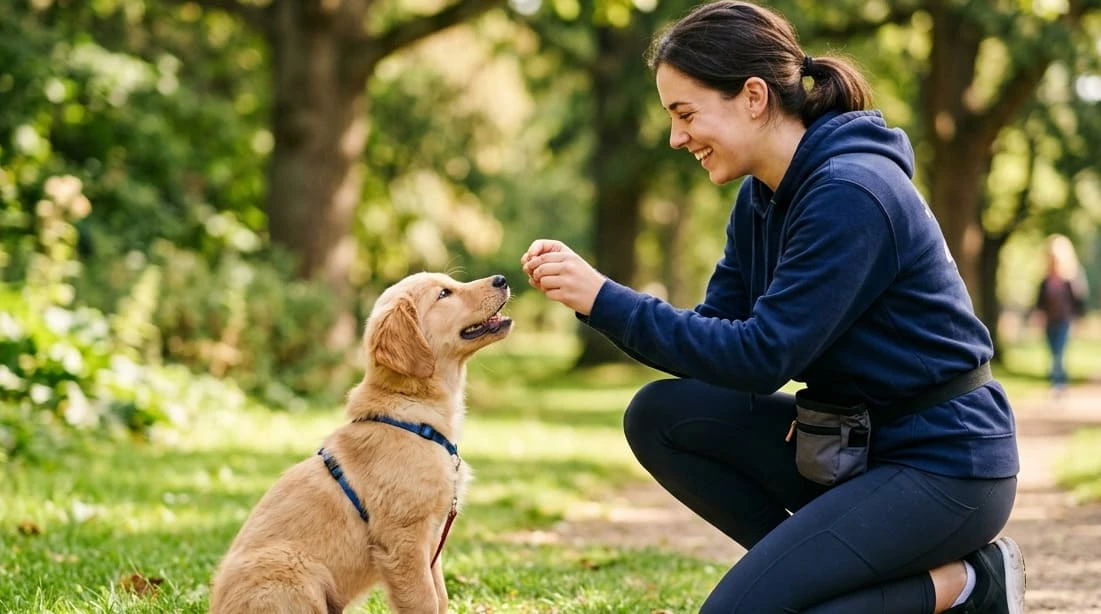
Hold a small treat at your puppy's nose level, then slowly move it back over their head. As their nose follows the treat upward, their bottom will naturally go down. The moment they sit, say "sit" clearly, then immediately reward them. Repeat this five times per session. Within a few days, most puppies will sit reliably on command. This is the foundation for all future commands, as it teaches your puppy that paying attention to you leads to good things.
Once "sit" is solid, add "stay" by asking your puppy to sit, taking one step back, then immediately returning and rewarding them. Gradually increase the distance over the week. "Come" is equally critical — it is the command that could one day save your dog's life. Practice it by crouching down, opening your arms, and calling your puppy's name in a bright, enthusiastic voice. Always make coming to you the most rewarding thing your puppy does all day.
The socialization window for puppies begins to close around 16 weeks of age. This makes week three one of the most important for their long-term temperament. A well-socialized puppy grows into a confident, friendly dog. A poorly socialized one is more prone to fear-based aggression and anxiety.
Even before your puppy is fully vaccinated, you can socialize them safely by inviting vaccinated, healthy dogs and calm people into your home. Carry your puppy in areas where unvaccinated dogs may have been, so they can experience sounds, sights, and smells traffic, bicycles, children, umbrellas without touching potentially contaminated ground. Keep exposures short, positive, and at your puppy's pace. Never force an interaction.
Start leash training in your living room before venturing outside. Clip the leash onto the collar and let your puppy drag it around for a few minutes to get used to the weight and feel. Then hold the leash loosely and walk a few steps, encouraging your puppy to follow with a treat held at your side. Praise warmly when they walk beside you. If they pull, stop walking entirely. The moment the leash goes slack, move forward again. Pulling never gets them anywhere — this lesson sinks in faster than you might think.
By the final week, you should have a puppy who understands sit, stay, and come, is making real progress with potty training, walks on a loose leash indoors, and is comfortable in their crate. Week four is about reinforcing everything you have built and layering in more challenge.
Commands your puppy knows at home will fall apart in a new location with more distractions — and that is completely normal. Start practising in the garden, then a quiet pavement, then gradually busier areas. Always lower your expectations slightly when introducing a new environment and rebuild from there. Reward generously for any success.
Puppy biting is normal behavior, but it must be redirected firmly and consistently. When your puppy bites your hand, let out a short, sharp "ouch," stop all interaction for a few seconds, and then redirect to an appropriate chew toy. Never play with your hands as toys this confuses the boundary. With consistent redirection across all family members, most puppies significantly reduce biting within two to three weeks.
Your 30-Day Milestone ChecklistBy the end of day 30, your puppy should be comfortable in their crate, making consistent progress with potty training, responding to sit, stay, and come in low-distraction settings, walking on a loose leash indoors, and feeling socialized and confident around familiar people. This is not the end of training — it is the beginning of a lifelong conversation between you and your dog. Stay consistent, celebrate small wins, and remember: every great dog started exactly where yours is right now.
Teacup puppies have become increasingly popular among dog lovers looking for a small, affectionate,
1 June 2026
Quick answer: Pet relocation to Dubai requires an ISO-compliant microchip, up-to-date vaccinations (
23 May 2026
Be the first to share your thoughts
No comments yet. Be the first to comment!
Share your thoughts and join the discussion below.

.webp&w=3840&q=75)