Saturday, October 3, 2026

Saturday, October 3, 2026
* All product/brand names, logos, and trademarks are property of their respective owners.
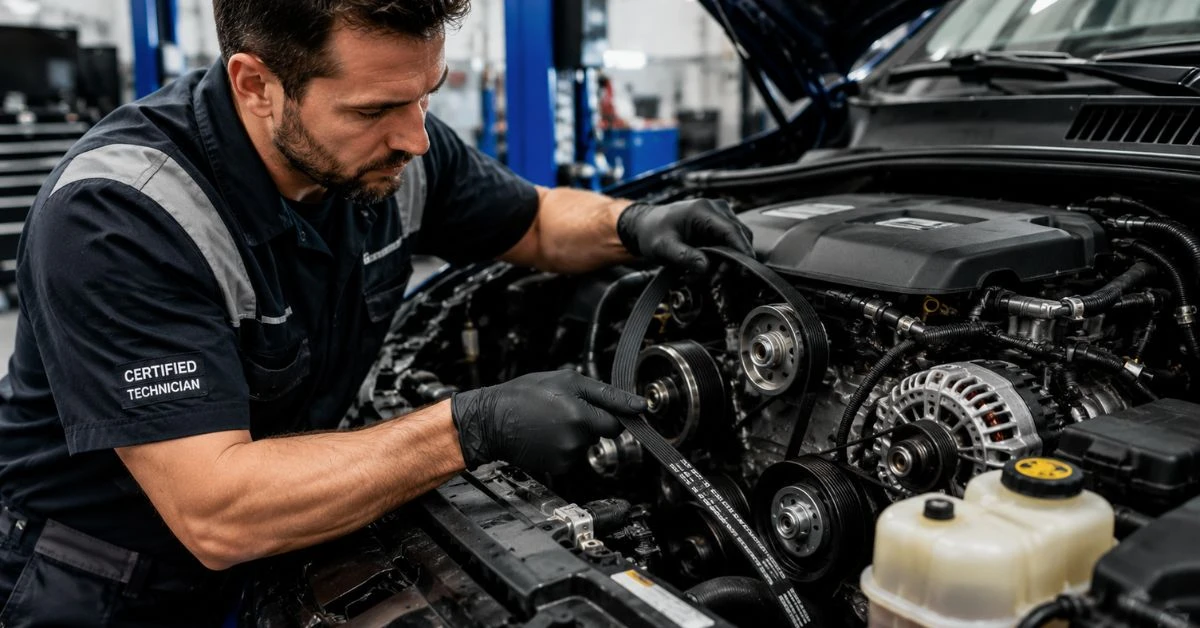
Booking an auxiliary belt replacement service is one of the most vital steps you can take to ensure your car stays dependable on the road.
This thin band of rubber connects your engine to crucial components, making it a cornerstone of regular preventative car servicing. If it snaps, your battery stops charging, your steering hardens, and your engine can quickly overheat.
By staying ahead of wear and tear with routine vehicle performance checks, you can avoid costly roadside breakdowns and keep your car running smoothly.
Often called the serpentine or drive belt, the auxiliary belt is a heavy-duty rubber loop. It transfers mechanical power from the engine’s crankshaft to your car's vital peripheral systems.
Without this continuous loop of power, your vehicle simply cannot function. It acts as the central workforce for your engine bay, ensuring that electricity, cooling, and steering support operate in perfect harmony while you drive.
The auxiliary belt doesn't just sit there; it powers several essential systems simultaneously.
The Alternator: This charges your battery and runs the vehicle's electrical systems. An alternator belt replacement is required if this link fails.
The Power Steering Pump: This system makes your car easy to maneuver at low speeds. A snapped power steering belt makes steering incredibly heavy and dangerous.
The Water Pump: In many cars, the belt drives the pump that circulates coolant, preventing catastrophic engine overheating.
The Air Conditioning Compressor: It keeps your cabin cool during hot British summers.
Thankfully, your car will usually warn you before a belt fails. Recognising these signs during your drive system maintenance checks can save you from a massive repair bill.
If you hear a loud screeching noise when starting the engine or turning the steering wheel, the belt is likely slipping. This often happens in damp UK weather when the rubber loses its grip.
Pop the bonnet and inspect the rubber. If you notice deep cracks, missing chunks, or frayed edges, you need an auxiliary belt replacement service immediately.
|
Belt Symptom |
Potential Consequence |
Urgency Level |
|
Squealing / Chirping |
Belt slippage, reduced power |
Moderate - Inspect soon |
|
Cracking / Fraying |
Complete belt snapping |
Critical - Replace immediately |
|
Heavy Steering |
Loss of power steering assistance |
High - Severe safety risk |
|
Battery Light On |
The alternator has stopped charging |
High - Car will break down |
Ignoring a worn belt is a massive gamble that usually ends on the back of a recovery lorry. Because the belt powers the water pump, a sudden snap can cause the engine to overheat within minutes, warping the engine block.
Furthermore, a snapping belt can whip around the engine bay, destroying expensive plastic sensors, hoses, and wiring. Investing in timely preventative car servicing is always cheaper than rebuilding a ruined engine.
When you take your vehicle to a garage, a professional technician does more than just swap the rubber. They will thoroughly inspect the entire pulley and tensioner system.
Pulleys can become misaligned, and tensioners can lose their spring over time. A proper auxiliary belt replacement service includes checking these parts to ensure the new belt wears evenly and lasts for years.
Taking care of your drive belt is the definition of smart car ownership. Neglecting this simple rubber band can lead to sudden steering loss, a dead battery, or catastrophic engine melting.
Prioritising an auxiliary belt replacement service protects your wallet from expensive, avoidable garage bills. Regular inspections ensure your vehicle remains safe, reliable, and ready for any journey. Do not wait for a breakdown to happen; check your belt today.
A: Most manufacturers recommend replacing the belt every 60,000 to 100,000 miles. You should also check it during annual vehicle performance checks to catch early wear. If you spot cracks sooner, replace it immediately to prevent breakdowns.
A: You can drive short distances, but the noise indicates a serious slipping issue. A slipping belt reduces charging efficiency and requires a prompt alternator belt replacement to avoid battery failure. Driving long distances with a noisy belt is highly risky.
A: Extreme engine heat, friction, and simple old age cause the rubber to perish over time. Contamination from engine oil leaks can also soften and destroy a power steering belt very quickly. Regular cleaning and inspections help prevent these fluid-related failures.
A: No, they are completely different components doing separate jobs inside your engine bay. While drive system maintenance focuses on external accessories, the timing belt controls internal engine valves. Both require regular replacement to prevent catastrophic engine failure.

I’m Henry Smith, a content writer and subject matter expert specializing in automobiles and real estate. I create informative, engaging, and easy-to-understand content, sharing practical insights, industry trends, and valuable knowledge with readers.
Choosing the right tyres is essential for your vehicle's safety, comfort, and performance, especiall
29 July 2026
Norway is a land of stunning fjords and majestic mountains. Moving between its vibrant cities requir
14 July 2026
When upgrading a car audio system, many enthusiasts spend hours comparing subwoofer brands and ampli
3 July 2026
Be the first to share your thoughts
No comments yet. Be the first to comment!
Share your thoughts and join the discussion below.