Saturday, October 3, 2026
Saturday, October 3, 2026
* All product/brand names, logos, and trademarks are property of their respective owners.
Content marketing has evolved rapidly over the past decade. In the early days, businesses focused on publishing a few high-quality blog posts and optimizing them for search engines. While this approach still works, competition in search results has grown significantly. Today, brands that want to dominate search visibility must think about scale — and that’s where programmatic SEO comes in.
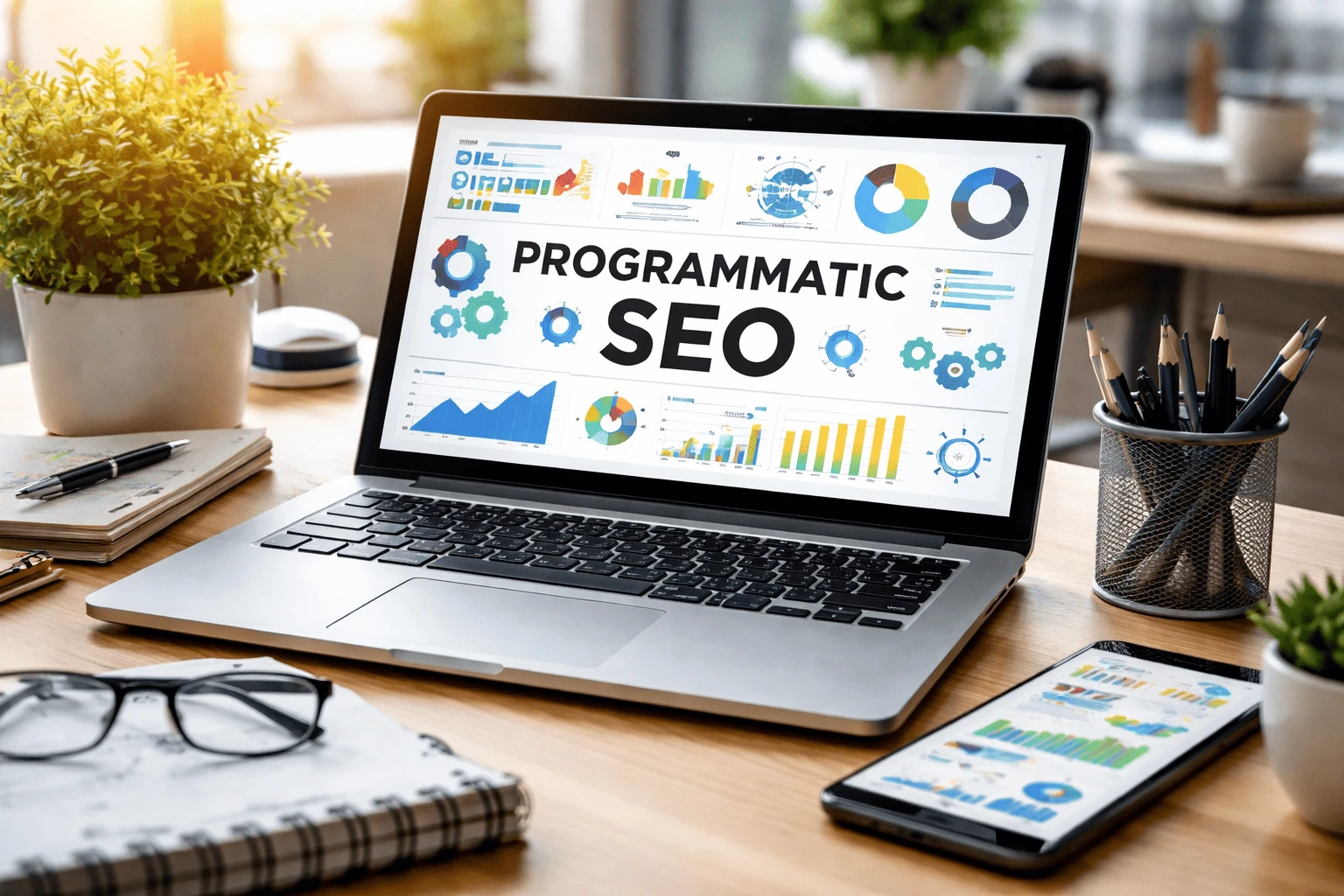
Programmatic SEO is a strategy that allows companies to create large numbers of search-optimized pages using data, templates, and automation. Instead of manually writing hundreds of individual articles, businesses build structured templates and connect them to databases that generate pages targeting thousands of long-tail keywords. This approach enables companies to capture massive amounts of organic traffic while maintaining efficiency.
Many of the internet’s biggest platforms already rely on programmatic SEO. Websites like Zapier, TripAdvisor, Canva, and Airbnb create thousands — sometimes millions — of pages targeting specific searches such as integrations, locations, or product features. These pages are not random; they are strategically designed to answer very specific search queries that users are actively looking for.
For marketers, startups, and publishers, programmatic SEO represents a powerful opportunity. It makes it possible to scale content marketing without dramatically increasing production costs. Instead of relying solely on manual writing, businesses can combine data, automation, and smart content templates to build a scalable SEO engine.
In this guide, we’ll explore what programmatic SEO is, how it works, and why it’s quickly becoming the future of scalable content marketing. By the end, you’ll understand how modern brands are using this strategy to dominate long-tail search traffic and grow their online presence.
Programmatic SEO is a method of creating many search-focused pages using a mix of data, page templates, and automation. Instead of writing every page from scratch, marketers build a system that can produce pages at scale based on search demand. This makes it especially useful for websites targeting lots of related long-tail keywords.
In simple words, programmatic SEO helps you publish a large number of pages efficiently. These pages are usually built around patterns. For example, instead of creating one article about “best CRM tools,” a company might create hundreds of pages like “best CRM tools for startups,” “best CRM tools for real estate,” and “best CRM tools for small agencies.”
That is the main difference between traditional SEO and programmatic SEO. Traditional SEO usually focuses on manually writing and optimizing one page at a time. Programmatic SEO focuses on creating a repeatable framework that can support hundreds or even thousands of pages without starting from zero each time.
This does not mean quality should be ignored. A good programmatic SEO strategy still needs useful content, clear search intent, strong formatting, and real value for the reader. Scale only works when the pages are actually helpful.
At the heart of programmatic SEO are three main parts: data, templates, and automation.
First, you need a solid data source. This could be a spreadsheet, database, product catalog, location list, feature library, or comparison dataset. That data becomes the foundation for your pages.
Second, you need a page template. This is the structure every page follows. It may include a title, intro, benefits, use cases, FAQs, and internal links. The template keeps the layout consistent while allowing key details to change from page to page.
Third, you need automation. This is what connects the data to the template and helps generate pages at scale. It can be done through CMS tools, no-code platforms, custom scripts, or SEO workflows built by developers and content teams.
Some of the best-known examples come from SaaS companies, travel sites, and marketplaces. A tool company might create pages for every app integration. A travel platform might build pages for thousands of destinations, hotels, or route combinations. A design platform might create pages for specific templates, industries, or formats.
For example, global brands often win with pages built around combinations such as location + service, tool + integration, or industry + solution. A similar approach can work for businesses in Pakistan and the UK too. A digital agency in Lahore could build targeted landing pages for “SEO services for doctors in Lahore” or “content marketing for ecommerce brands in Pakistan.” A UK SaaS company could create pages around industry-specific use cases such as “CRM for accountants in London” or “email automation for recruitment agencies in Manchester.”
The beauty of programmatic SEO is that it turns content into a scalable system. When done well, it helps brands cover more search opportunities, build topical authority, and grow organic traffic much faster than relying only on manual publishing.
Programmatic SEO is becoming a major part of modern content marketing because it solves one of the biggest problems brands face today: how to grow content output without letting costs and workloads spiral out of control. As search competition gets tougher, publishing a few blog posts each month is often not enough. Businesses need a smarter way to target more keywords, serve more audience segments, and build stronger organic visibility. That is exactly where programmatic SEO stands out.
One of the biggest advantages of programmatic SEO is that it allows brands to scale content production more efficiently. Instead of assigning writers to create hundreds of similar pages manually, businesses can build one strong framework and use it across many pages.
This is especially powerful for long-tail SEO strategy. Long-tail keywords may have lower individual search volume, but together they can bring in large amounts of qualified traffic. For example, rather than targeting only a broad keyword like “email marketing software,” a company can also target terms like “email marketing software for restaurants,” “email marketing software for coaches,” and “email marketing software for nonprofits.” These searches often come from users with clearer intent, which can lead to better engagement and conversions.
For blogging platforms, agencies, SaaS companies, and ecommerce brands, this creates a huge growth opportunity. A business in Pakistan could create pages for different city-based services, customer industries, or product categories. A UK-based firm could do the same by targeting regional, niche, or sector-specific queries. This turns content marketing into a more scalable and strategic asset.
AI and automation are making programmatic SEO even more practical. In the past, setting up large-scale SEO systems often required heavy developer support. Today, many teams use a mix of CMS automation, AI-assisted drafting, keyword clustering tools, and internal linking systems to speed up production.
AI can help with tasks like summarizing data, drafting page intros, generating FAQs, and identifying content gaps. Automation tools can handle publishing workflows, metadata creation, and template population. Together, these tools reduce repetitive work and free up content teams to focus on strategy, quality control, and user value.
Still, AI should support the process, not replace judgment. Search engines are getting better at identifying pages that exist only to rank without offering real help. That means successful programmatic content still needs human oversight, strong editing, and a clear understanding of user intent.
While programmatic SEO offers scale, it also comes with risks. The biggest one is thin content. If pages are too similar, poorly written, or offer little unique value, they may fail to rank or even hurt the website’s reputation.
That’s why best practices matter. Each page should serve a real purpose, answer a clear search need, and include something genuinely useful. This could be original data, relevant examples, practical comparisons, FAQs, or local insights. Strong internal linking, clean page structure, and search-intent alignment also make a big difference.
The future of scalable content marketing will not belong to brands that publish the most pages. It will belong to brands that combine SEO automation, smart systems, and people-first content in a way that is both efficient and valuable. That balance is what makes programmatic SEO such a powerful strategy for the years ahead.
Programmatic SEO is changing the way businesses approach content marketing. Instead of relying only on manually written blog posts, brands can now build systems that produce search-optimized pages at scale. By combining structured data, smart templates, and automation tools, companies can reach thousands of highly specific search queries that traditional SEO strategies might miss.
This approach is especially powerful for targeting long-tail keywords, which often represent users with clear intent. Whether someone is searching for a specific tool integration, a service in a particular city, or a solution for a niche industry, programmatic SEO allows businesses to create content that directly answers those queries. When done correctly, this not only improves search visibility but also attracts more qualified visitors who are actively looking for solutions.
However, scalability should never come at the cost of quality. Search engines increasingly prioritize helpful, people-first content, which means programmatic pages must still provide genuine value. Strong structure, clear explanations, useful examples, and thoughtful internal linking all play an important role in making these pages effective. Businesses that treat programmatic SEO as a thoughtful strategy rather than a shortcut will see the best results.
For startups, SaaS companies, publishers, and digital agencies, the opportunity is huge. Programmatic SEO allows organizations to expand their reach, build topical authority, and compete with much larger competitors in search results. It transforms content marketing from a slow manual process into a scalable growth engine.
As search behavior continues to evolve and automation tools become more advanced, programmatic SEO will likely become a core strategy for modern digital marketing. Brands that start building scalable content systems today will be in a strong position to capture organic traffic tomorrow.
If you’re looking to grow your website’s visibility, now is the perfect time to explore how programmatic SEO can power your long-term content marketing strategy.

Hi, I’m Ahmed, a professional content writer and SEO specialist. I help businesses, brands, and websites create clear, engaging, and search-friendly content that attracts the right audience and drives results.
With a strong understanding of SEO, keyword research, blog writing, website content, and content strategy, I craft content that is not only well-written but also optimized to perform on search engines. My goal is to turn ideas into powerful words that build trust, improve visibility, and support business growth.
Whether you need blog posts, website copy, product descriptions, SEO articles, or content optimization, I can help create content that connects with readers and supports your online goals.
The real reason why personalization fails in marketing isn’t that marketers lack ideas. It usu
15 September 2026
The success of any event depends on more than just a great venue and a well-planned schedule. Behind
3 August 2026
If you examine the current professional landscape, you will notice a stark, fascinating division wit
3 July 2026
Be the first to share your thoughts
No comments yet. Be the first to comment!
Share your thoughts and join the discussion below.