Sunday, November 29, 2026

Sunday, November 29, 2026
* All product/brand names, logos, and trademarks are property of their respective owners.
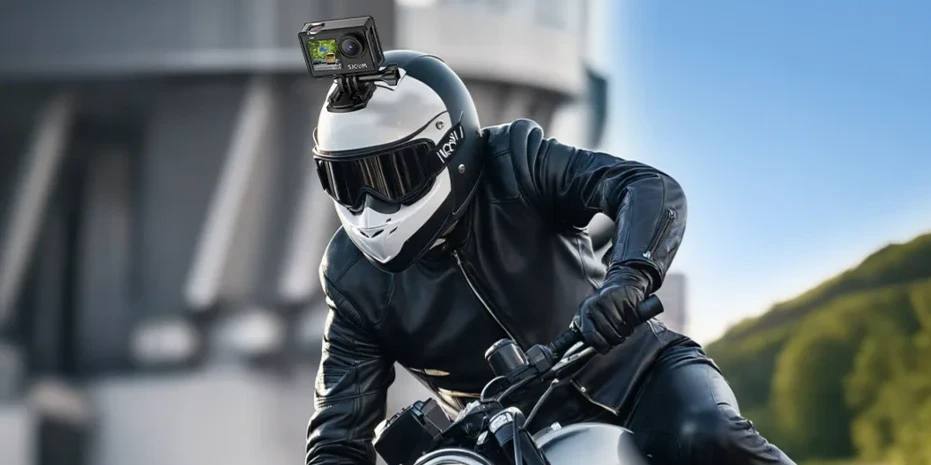
Finding a good motorcycle camera is one of the smartest investments a rider can make. Whether you commute through busy city traffic, tour long-distance highways, or simply want to record your weekend rides, a helmet camera gives you evidence, peace of mind, and a permanent record of the road. But with dozens of models on the market—from budget action cams to premium flagship devices—choosing the right one can be overwhelming. This complete guide walks you through everything you need to know to pick a good motorcycle camera for helmet use.
Helmet-mounted cameras have become increasingly popular for three main reasons. First, they provide a rider’s-eye perspective, capturing exactly what you see as you ride. This makes the footage far more useful than a bike-mounted camera in the event of an incident. Second, a helmet camera turns with your head, so it naturally follows your line of sight and captures side traffic when you check a mirror or glance at an intersection. Third, helmet mounting is quick and transferable—you can move the same camera between helmets or take it off when you park.
For many riders, a good motorcycle camera is also a safety tool. Knowing that footage is being recorded can reduce aggressive driving around you, and if an accident does occur, video evidence can be invaluable for insurance claims and legal disputes.
Weight is the single most important factor for helmet mounting. A heavy camera creates leverage on the helmet shell, which can cause fatigue on long rides and, in a crash, adds unnecessary force. Look for a compact, lightweight unit that mounts flush to the side or chin bar. Chin mounts are generally preferred because they keep the camera centred and reduce drag.
Vibration is the enemy of motorcycle footage. Engines, road surfaces, and wind all introduce shake that can make even high-resolution video unwatchable. Electronic image stabilization (EIS) is essential in a good motorcycle camera. The best systems smooth out bumps while keeping the horizon level, so your footage stays crisp even on rough roads.
Most modern helmet cameras offer 1080p or 4K recording. Higher resolution gives you more detail and the ability to crop footage later, but it also consumes more storage and battery. For helmet use, 1080p at 60 frames per second is often the sweet spot: smooth motion, manageable file sizes, and a clearer read of licence plates. Pay attention to low-light performance as well — a camera that struggles at dusk or in tunnels is far less useful for evidence.
A good motorcycle camera needs to last as long as your ride. Budget action cameras often deliver only 60–90 minutes per charge, which is fine for short trips but frustrating for touring. Look for user-replaceable batteries so you can carry spares, and consider loop recording so the camera automatically overwrites the oldest files when the card fills up.
Motorcycles are loud. Internal microphones are usually overwhelmed by wind and engine noise above 40 mph. If audio matters to you — for vlogging or commentary — check whether the camera supports an external microphone or at least offers wind noise reduction. Otherwise, accept that most helmet footage will be visual only.
Riding means unpredictable weather. Ensure your camera is either waterproof natively or comes with a reliable waterproof housing. It should also handle vibration, temperature swings, and the occasional drop.
Check which mounts are included and whether the camera uses a standard mounting format. Wi-Fi and app connectivity are also worth having — being able to review clips, change settings, and download footage from your phone is a huge convenience.
A helmet camera captures your perspective and travels with you, but it requires charging and can be inconvenient for very long rides. A bike-mounted dash cam is wired to the motorcycle’s power and runs continuously, but it records a fixed angle and stays with the bike. Many serious riders use both: a dash cam for continuous evidence and a helmet camera for the rider’s viewpoint and vlogging.
The SJCAM SJ30 If you are looking for a good motorcycle camera that balances capability, portability, and value, the SJCAM SJ30 is an excellent choice for helmet mounting. It is compact and light enough to sit comfortably on a chin or side mount without pulling your helmet off balance, and it delivers the kind of image stabilization and clear, high-resolution recording that riders actually need on real roads.
The SJ30’s user-friendly design makes it easy to operate with gloves on, and its connectivity options let you check your footage from your phone after a ride. For commuters who want reliable evidence, for tourers who want to document their journeys, and for new riders building their first camera setup, the SJCAM SJ30 offers dependable performance at a price that leaves room for spare batteries and quality mounts.
Choosing a good motorcycle camera comes down to matching the device to how you actually ride. Prioritize weight, stabilization, battery life, and durability, and be honest about whether you need 4K or whether smooth 1080p is enough. Get those fundamentals right, mount it securely, and test your setup before you rely on it. Do that, and a helmet camera will serve you well on every ride — and the SJCAM SJ30 is a smart place to start.

When a sudden loss of tyre pressure leaves motorists stranded on driveways, car parks, or dual carri
16 November 2026
That dreaded dashboard tyre warning rarely comes at a convenient time. A soft tyre may just need air
12 November 2026
Why do so many motorists view vehicle maintenance as an optional cost instead of an essential safety
2 November 2026
Be the first to share your thoughts
No comments yet. Be the first to comment!
Share your thoughts and join the discussion below.