Saturday, October 3, 2026

Saturday, October 3, 2026
* All product/brand names, logos, and trademarks are property of their respective owners.
Yoga has evolved far beyond a simple physical practice and has become a powerful tool for health, wellness, and personal transformation. As the demand for qualified yoga professionals continues to grow, many aspiring practitioners find themselves choosing between becoming a yoga teacher or specializing in yoga therapy. While both paths share the same yogic roots, they differ significantly in purpose, approach, and outcomes.
Understanding the distinction between yoga teaching and yoga therapy can help students choose the right training program, whether it is a 200 hour best yoga teacher training in Rishikesh or a 100 hour yoga therapy TTC in Rishikesh.
Yoga teaching focuses on guiding students through yoga practices that promote overall health, flexibility, strength, mindfulness, and relaxation. A yoga teacher typically works with groups of students and designs classes suitable for various experience levels.
The primary goals of yoga teaching include:
Teaching yoga postures (asanas)
Guiding breathing techniques (pranayama)
Introducing meditation and relaxation practices
Improving flexibility and physical fitness
Promoting mental well-being and stress management
A yoga teacher creates a safe and supportive environment where students can develop a regular yoga practice. Most yoga instructors begin their journey by completing a 200-hour yoga teacher training in Rishikesh, which provides a strong foundation in yoga philosophy, anatomy, alignment, teaching methodology, and practical instruction.
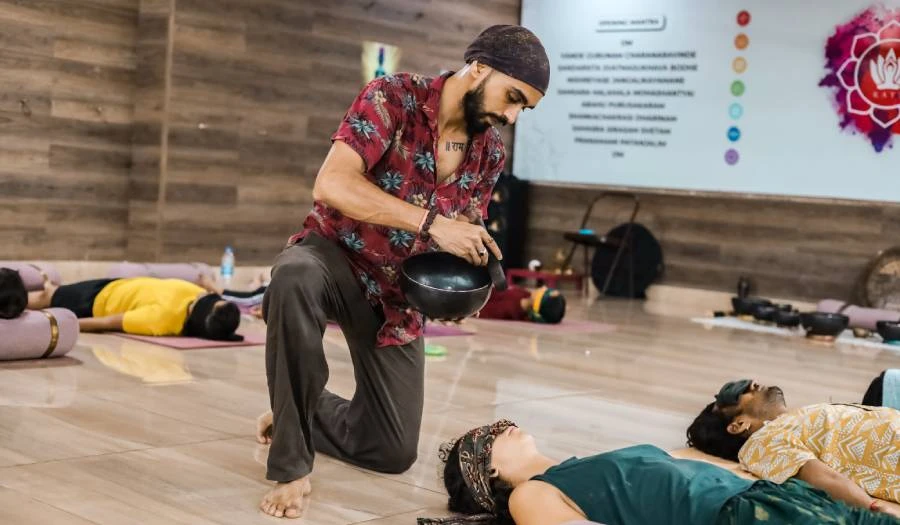
Yoga therapy is a specialized application of yoga designed to address specific physical, mental, emotional, or lifestyle-related health conditions. Unlike general yoga classes, yoga therapy involves individualized assessment and customized practices tailored to the unique needs of each person.
Yoga therapy may help support individuals dealing with:
Chronic back pain
Arthritis
Anxiety and depression
Hypertension
Diabetes
Stress-related disorders
Postural imbalances
Respiratory issues
A yoga therapist uses yoga as a complementary healing approach by combining asanas, breathing exercises, meditation, relaxation techniques, and lifestyle recommendations.
Students who wish to specialize in therapeutic applications often enroll in a 100 hour yoga therapy TTC in Rishikesh to gain deeper knowledge of healing-oriented yoga practices and therapeutic techniques.
The primary purpose of yoga teaching is to educate and guide students in a general yoga practice for overall wellness.
Yoga therapy, on the other hand, focuses on addressing specific health concerns and improving an individual's quality of life through personalized yoga interventions.
Yoga teachers usually work with groups and create classes that accommodate a wide range of participants.
Yoga therapists often work one-on-one or in small groups, carefully assessing each student's condition before recommending practices.
In a traditional yoga class, instructors may ask about injuries or limitations but generally follow a structured class format.
Yoga therapists conduct detailed assessments that may include posture analysis, breathing patterns, lifestyle habits, stress levels, and health history before creating a personalized program.
Yoga teachers focus on education, movement, mindfulness, and personal growth.
Yoga therapists use yoga techniques to support healing and recovery while working within ethical and professional boundaries.
A foundational yoga instructor course, such as a 200-hour best yoga teacher training in Rishikesh, prepares students to teach yoga classes confidently.
For those interested in therapeutic applications, a 100-hour yoga therapy TTC in Rishikesh provides specialized knowledge about anatomy, common health conditions, therapeutic sequencing, and individualized yoga interventions.
Choosing between yoga teaching and yoga therapy depends on your personal goals.
You may choose yoga teaching if:
You enjoy leading group classes.
You want to inspire others through yoga.
You are passionate about yoga philosophy and lifestyle.
You want a strong foundation in teaching methodology.
You may choose yoga therapy if:
You are interested in holistic healing.
You enjoy working closely with individuals.
You want to understand health conditions more deeply.
You wish to help people manage physical or emotional challenges through yoga.
Many professionals actually combine both paths. They begin with a 200-hour best yoga teacher training in Rishikesh and later enhance their expertise through a 100-hour yoga therapy TTC in Rishikesh.
Known as the Yoga Capital of the World, Rishikesh attracts yoga students from around the globe. The city offers an authentic yogic environment, experienced teachers, and a spiritual atmosphere that supports deep learning.
Whether you are pursuing yoga teaching or yoga therapy, training in Rishikesh provides opportunities to immerse yourself in traditional yogic wisdom while gaining internationally recognized certifications.
Although yoga teaching and yoga therapy share common foundations, they serve different purposes. Yoga teaching focuses on guiding students toward overall wellness, while yoga therapy applies yogic tools to support specific health conditions and individual healing goals.
For those looking to start a teaching career, a 200-hour best yoga teacher training in Rishikesh offers a comprehensive foundation. For individuals seeking specialized therapeutic knowledge, a 100-hour yoga therapy TTC in Rishikesh provides valuable skills that can make a meaningful impact on people's lives.
By understanding these differences, aspiring yoga professionals can choose the educational path that aligns best with their passion, career aspirations, and desire to serve others through yoga.

I’m Ajay, a motivated and responsible professional who believes in continuous improvement and building strong professional relationships. I approach every opportunity with dedication, a positive mindset, and a commitment to achieving meaningful results.
Most architecture dissertations don't collapse because the writing is weak. They collapse because th
12 September 2026
The World Tech Olympiad gives school students an opportunity to explore technology, test their knowl
20 August 2026
Here is a metric that should haunt every product leader, business analyst, and enterprise executive:
29 July 2026
Be the first to share your thoughts
No comments yet. Be the first to comment!
Share your thoughts and join the discussion below.