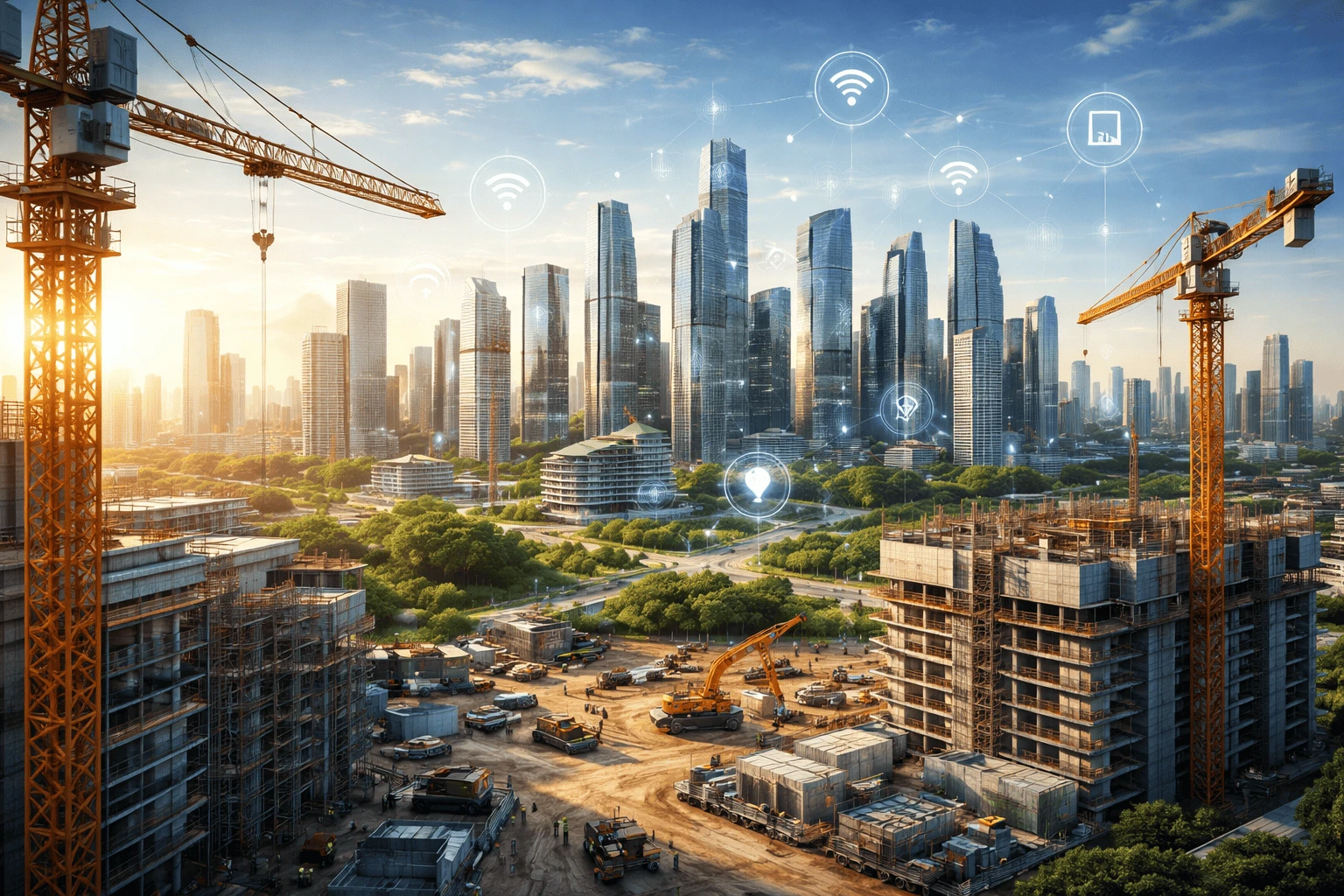
Cities are growing faster than ever, and with that growth comes a big challenge: how do we build urban spaces that are not only larger, but also smarter, safer, and more sustainable? This is where the idea of smart cities becomes so important. A smart city uses technology, data, and modern infrastructure to improve everyday life for the people who live there. From better traffic systems and energy-saving buildings to digital public services and cleaner transport, smart cities are designed to solve real urban problems in practical ways.
At the same time, these cities cannot become “smart” without the right construction methods behind them. Traditional building approaches are often too slow, too expensive, and sometimes too wasteful to meet the needs of modern urban life. That is why modern construction solutions are now playing a major role in shaping the future of cities. Techniques like modular construction, prefabrication, Building Information Modeling (BIM), and AI-powered project planning are helping developers build faster, reduce waste, and create more efficient spaces.
The rise of smart cities and modern construction solutions is not just a trend. It reflects a real shift in how we think about urban development. Governments, businesses, and planners are now looking for ways to create cities that are connected, resilient, and ready for the future. In this blog, we will explore what smart cities really mean, why they matter, and how modern construction is helping turn these ambitious ideas into reality.
1) What Are Smart Cities and Why They Matter
The Concept of Smart Cities
A smart city is an urban area that uses technology and data to improve the quality of life for its residents. Instead of relying only on traditional infrastructure, smart cities use digital systems, sensors, and connected devices to manage services more efficiently. These technologies help city authorities monitor traffic, reduce energy consumption, improve public safety, and provide faster services to citizens.
One of the key technologies behind smart cities is the Internet of Things (IoT). IoT connects everyday objects—such as streetlights, traffic signals, and public transportation—to the internet so they can collect and share real-time data. For example, smart traffic systems can analyze road congestion and adjust traffic signals automatically to reduce delays. Similarly, smart waste management systems can notify authorities when garbage bins are full, making city services more efficient.
Another important aspect of smart cities is data-driven decision-making. Governments can use data collected from sensors and digital platforms to understand how the city operates. This information helps planners make better decisions about transportation, housing, energy, and public services. Instead of reacting to problems after they happen, cities can predict issues and solve them before they grow larger.
Key Features of Smart Cities
Smart cities are built around several important features that make urban living more efficient and sustainable.
One major feature is smart infrastructure. This includes connected roads, intelligent street lighting, and digital monitoring systems that help cities run smoothly. Smart infrastructure improves safety and reduces maintenance costs because problems can be detected early.
Another key feature is smart mobility. Traffic congestion is a common problem in large cities, but smart mobility solutions help manage transportation better. Technologies such as real-time traffic monitoring, smart parking systems, and app-based public transport services allow people to travel more efficiently while reducing fuel consumption and pollution.
Energy-efficient buildings are also a major part of smart cities. Many modern buildings now include smart energy systems that automatically control lighting, heating, and cooling based on occupancy. This reduces energy waste and lowers operational costs while helping cities move toward sustainability goals.
Finally, digital public services make city life more convenient for citizens. Online platforms allow people to access government services, pay bills, report issues, and communicate with local authorities without needing to visit offices physically.
Real-World Examples of Smart Cities
Many cities around the world are already adopting smart city technologies to improve urban living.
London, for example, has implemented several smart mobility initiatives. The city uses real-time data to manage public transportation and traffic systems. Apps provide commuters with live updates about bus and train schedules, helping people plan their journeys more efficiently.
Singapore is widely considered one of the most advanced smart cities in the world. The government uses sensors and data analytics to manage traffic, monitor environmental conditions, and improve public safety. Singapore has also introduced smart housing systems that use technology to improve energy efficiency and urban planning.
In developing regions, countries are also beginning to adopt smart city concepts. In Pakistan, projects like smart housing developments and technology-driven urban planning are gradually emerging. Cities such as Islamabad and Lahore are exploring digital infrastructure and sustainable housing solutions to handle rapid population growth.
These examples show that smart cities are no longer just futuristic ideas. They are already shaping how cities operate and how people live, work, and travel.
2) Modern Construction Solutions Powering Smart Cities
Smart Construction Technologies
Building a smart city requires more than just good planning—it also needs advanced construction technologies that can handle complex projects efficiently. One of the most important tools used today is Building Information Modeling (BIM). BIM allows architects, engineers, and construction teams to create detailed digital models of buildings before construction even begins. These models show the structure, materials, energy systems, and even maintenance plans of a building.
The biggest advantage of BIM is that it improves collaboration between teams. Everyone involved in the project can work on the same digital model, reducing mistakes and avoiding costly delays. For example, if a design conflict is detected early in the model, it can be fixed before construction starts.
Another major innovation is the use of Artificial Intelligence (AI) in construction. AI can analyze project data, predict delays, and optimize resource management. Construction companies are using AI-powered software to schedule tasks, manage supply chains, and improve safety on job sites.
In addition, digital twin technology is becoming increasingly important. A digital twin is a virtual replica of a building or infrastructure system. Once construction is completed, the digital twin continues to collect real-time data from sensors inside the building. This allows city managers and building operators to monitor performance, detect problems early, and improve maintenance efficiency.
Innovative Building Methods
Modern construction methods are also transforming how buildings are created. Traditional construction can take years to complete and often produces a lot of waste. Today, developers are adopting faster and more efficient techniques such as modular construction and prefabrication.
In modular construction, buildings are constructed in sections or modules inside factories. These modules are then transported to the construction site and assembled together like building blocks. Because much of the work happens in a controlled factory environment, the process becomes faster, safer, and more consistent.
Prefabrication works in a similar way. Building components such as walls, floors, and structural elements are manufactured off-site and then delivered to the site for assembly. This approach significantly reduces construction time and minimizes material waste.
Another advantage of these methods is cost efficiency. Since projects can be completed faster, labor costs and project delays are reduced. Many governments and developers are now using modular construction to build housing, hospitals, and office spaces quickly, especially in rapidly growing urban areas.
Sustainable and Green Construction
Sustainability is one of the most important goals of modern construction. Smart cities aim to reduce environmental impact while improving living standards, and green construction practices help achieve this goal.
One major focus is the use of energy-efficient building materials. Materials such as insulated concrete, recycled steel, and eco-friendly insulation help buildings maintain comfortable indoor temperatures while using less energy.
Another important development is the rise of net-zero buildings. These buildings produce as much energy as they consume through renewable energy sources like solar panels and energy-efficient systems. Many cities around the world are encouraging developers to adopt net-zero building standards to reduce carbon emissions.
Modern construction also focuses on reducing waste and lowering the carbon footprint of projects. By using prefabrication, better project planning, and sustainable materials, construction companies can significantly reduce the environmental impact of large-scale developments.
As cities continue to expand, sustainable construction will play a crucial role in creating healthier and more resilient urban environments.
Conclusion
The rise of smart cities represents a major shift in how the world approaches urban development. As populations continue to grow and cities become more crowded, traditional infrastructure alone is no longer enough to meet modern demands. Smart cities use technology, data, and intelligent systems to make urban life more efficient, sustainable, and convenient for residents. From smarter transportation systems and energy-efficient buildings to digital public services and connected infrastructure, these cities are designed to improve everyday living while addressing long-term environmental challenges.
However, the vision of smart cities cannot become reality without the support of modern construction solutions. Innovative technologies such as Building Information Modeling (BIM), artificial intelligence, and digital twin systems are transforming how buildings and infrastructure are planned and managed. These tools allow developers to work more efficiently, reduce errors, and optimize project timelines.
At the same time, new building methods like modular construction and prefabrication are helping cities grow faster while minimizing waste and lowering costs. These methods allow large-scale developments to be completed in less time compared to traditional construction techniques, making them especially valuable for rapidly expanding urban areas.
Sustainability also remains at the heart of modern urban development. Green construction practices, energy-efficient materials, and net-zero buildings are helping cities reduce their environmental impact while improving the quality of life for residents. As governments and developers continue to focus on sustainability, these innovations will play an essential role in shaping future cities.
Looking ahead, the combination of smart technology and advanced construction methods will continue to transform urban environments around the world. Cities that embrace these innovations will be better prepared to handle population growth, climate challenges, and evolving technological needs.
For policymakers, developers, and urban planners, the message is clear: the future of cities lies in building smarter, more sustainable, and more connected communities. By investing in modern construction solutions today, we can create cities that are not only efficient but also resilient and ready for the challenges of tomorrow.