Saturday, October 3, 2026

Saturday, October 3, 2026
* All product/brand names, logos, and trademarks are property of their respective owners.
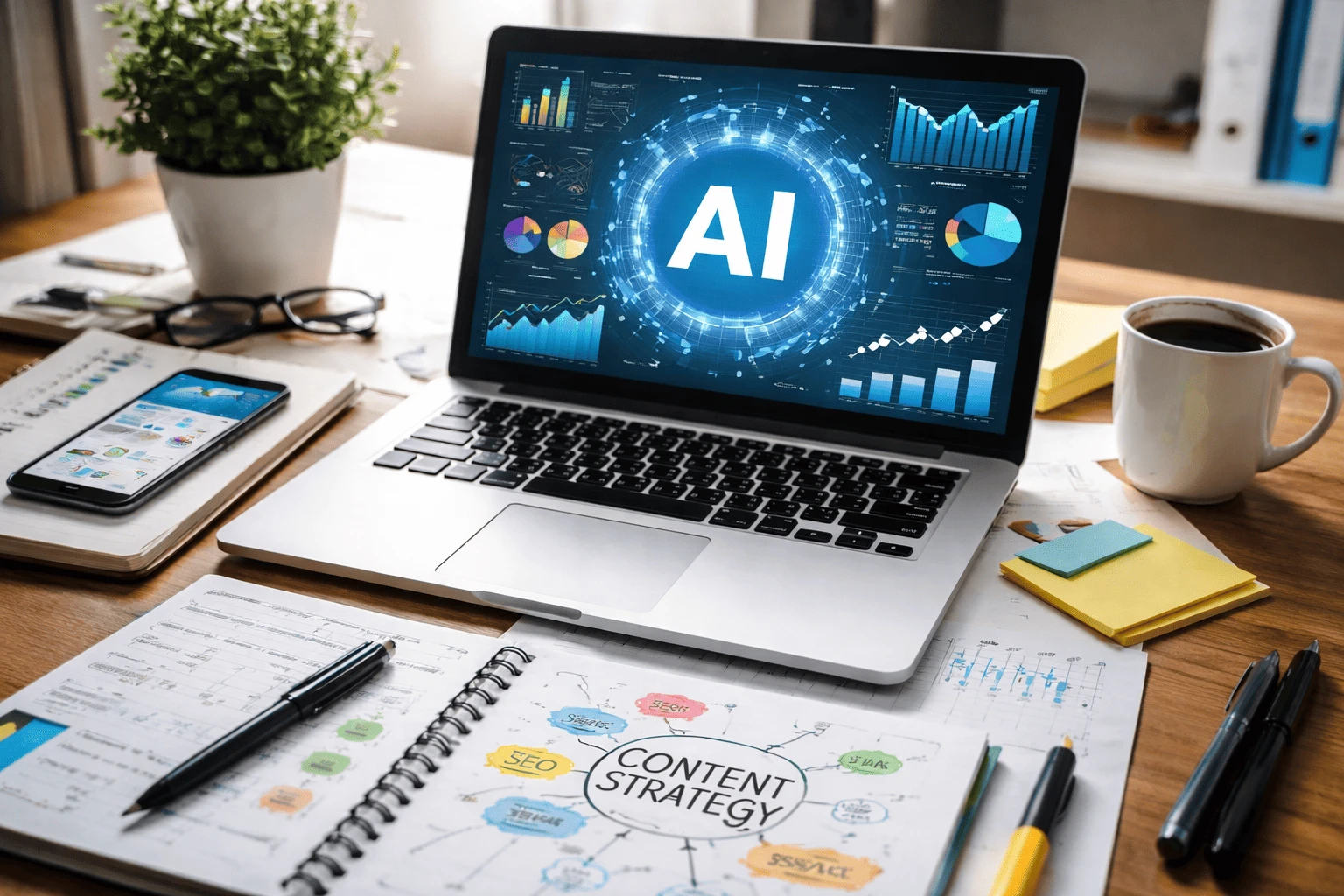
Artificial intelligence is no longer just a trendy add-on in digital marketing. It has become one of the biggest reasons some brands, bloggers, and businesses are climbing higher in Google search results while others are struggling to keep up. The real shift is not simply about using AI to write faster. It is about using AI in smarter ways to research topics, understand search intent, organize content, improve quality, and build pages that actually deserve to rank.
Today, marketers are under pressure to create more content in less time. At the same time, Google keeps getting better at rewarding content that is useful, relevant, and well-structured. This is exactly where AI content marketing strategies are making a huge difference. Instead of guessing what topics to cover or spending hours planning one article, marketers can now use AI to uncover keyword opportunities, spot gaps in competitor content, and shape content around what real users are searching for. When this is done properly, the result is not low-quality machine-written text. The result is stronger, more targeted content supported by data and polished by human creativity.
What makes AI especially powerful is how it fits into every stage of content marketing. It can help before writing starts through keyword research and topic clustering. It can help during writing by building outlines, improving readability, and suggesting stronger headlines. It can even help after publishing by identifying outdated sections and recommending updates that keep content fresh in Google’s eyes. In other words, AI is not replacing strategy. It is strengthening it.
In this blog, we will break down the AI content marketing strategies that are helping websites dominate Google rankings. You will see how AI can support research, planning, writing, optimization, and content refreshing in a practical way. More importantly, you will learn why the best results happen when AI and human insight work together.
Creating content that ranks on Google starts long before the writing process begins. One of the biggest advantages of AI in content marketing is how it improves the research and planning stage. Instead of relying on guesswork, marketers can use AI tools to analyze search data, understand audience intent, and discover opportunities that competitors may have missed. When done correctly, this stage builds a strong SEO foundation for every blog post.
Keyword research is one of the most important steps in SEO, and AI has made it faster and smarter. Traditional keyword research often involved manually checking search volumes, competition levels, and related terms. Today, AI-powered tools can process huge amounts of data in seconds and uncover keywords that people are actively searching for.
AI tools can also help identify search intent, which is something Google prioritizes heavily in rankings. Search intent means understanding why someone is searching for a particular keyword. For example, someone searching for “AI content marketing tools” is likely looking for recommendations, while someone searching for “how to use AI for content marketing” probably wants a detailed guide.
By analyzing patterns in search queries, AI tools can suggest keywords that match different types of intent such as informational, transactional, or navigational. This allows marketers to create content that directly answers user needs, which increases the chances of ranking higher on Google.
Another powerful AI strategy is topic clustering. Instead of writing random articles around a niche, successful websites build clusters of related content that cover a topic from multiple angles. This helps search engines understand that the website has deep expertise in a particular subject.
AI tools can automatically group related keywords into clusters. For example, a content marketing cluster might include topics like AI writing tools, AI SEO optimization, AI keyword research, and AI content workflows. Each of these topics becomes a separate article, all linked together under a broader theme.
This structure helps build topical authority, which Google rewards with better rankings. When search engines see a website consistently publishing detailed and interconnected content about a subject, it signals expertise and reliability.
Understanding what competitors are doing is another area where AI is extremely useful. Instead of manually analyzing dozens of blog posts, AI tools can quickly scan competitor content and identify patterns.
For example, AI can highlight:
Common keywords used by top-ranking pages
Content length and structure trends
Frequently covered subtopics
Missing areas that competitors have not addressed
These insights help marketers create content that is more comprehensive and valuable than existing articles. If competitors are covering basic ideas, your content can go deeper by adding case studies, examples, or updated strategies.
This approach transforms content creation from simple writing into a strategic process. Rather than copying what others are doing, marketers can use AI insights to build content that fills gaps and delivers better value to readers.
Once the research and planning stage is done, the next challenge is turning that strategy into content that performs well in search results. This is where AI content marketing becomes even more powerful. It helps marketers produce content faster, but more importantly, it helps them create content that is better organized, more relevant, and easier to optimize for Google. The key is not to let AI take over everything. The real win comes from using AI as a smart assistant while keeping human judgment at the center.
One of the most common uses of AI in content marketing is content drafting. AI tools can help generate blog outlines, headline ideas, opening paragraphs, FAQs, and even full first drafts. This saves time and helps marketers move past writer’s block. Instead of staring at a blank page, they start with a clear structure and then improve it.
But there is an important difference between publishing raw AI text and creating content that truly ranks. Google rewards helpful, people-first content. That means the final article still needs a human touch. Marketers should use AI to speed up the writing process, then refine the content by adding personal insight, original examples, clear explanations, and a natural tone.
For example, a UK-based digital agency might use AI to draft a post about local SEO trends, but the final version becomes much stronger when the writer adds real campaign lessons, local market understanding, and examples from actual client work. The same goes for a blogger in Pakistan writing about AI blogging tools. AI can provide the first structure, but local examples, personal experience, and audience understanding are what make the content stand out.
Writing a draft is only part of the job. To compete in Google search, content also needs to be optimized. AI tools now help marketers improve many important on-page SEO elements without making the writing feel stuffed with keywords.
AI can suggest:
better heading structures
missing related keywords
improved readability
stronger meta descriptions
clearer paragraph flow
FAQ ideas based on user searches
This makes optimization more strategic. Instead of forcing keywords into random sentences, marketers can use AI to place primary and supporting keywords naturally where they make sense. AI can also identify whether a piece of content is too thin, repetitive, or missing sections that readers expect to see.
Another major advantage is readability. Google does not just care about keywords. It also values content that is easy to understand and useful to readers. AI tools can flag long sentences, unclear wording, and weak transitions, helping writers improve the overall reading experience. That matters because content that keeps users engaged often performs better over time.
One of the most overlooked AI SEO strategies is using AI to refresh older content. Many websites focus only on publishing new posts, but some of the biggest ranking gains come from improving articles that already exist.
AI can help identify outdated information, weak sections, missing keywords, and new subtopics that should be added. For example, a blog post written last year about content marketing trends may now be missing new AI tools, new search behavior patterns, or updated Google ranking priorities. Instead of rewriting the article from scratch, AI can quickly show what needs improvement.
This strategy is especially useful for news-style blogs and long-form content platforms because it helps older posts stay competitive. A refreshed article often performs better than a brand-new one because it already has some age, authority, and indexing history. By combining AI-driven analysis with human editing, marketers can turn underperforming posts into valuable ranking assets again.
In simple terms, AI does not just help create content. It helps improve it, strengthen it, and extend its life. That is why AI-driven content creation and optimization are becoming essential parts of modern SEO success.
Artificial intelligence is quickly changing the way content marketing works, but the websites dominating Google rankings are not simply relying on AI alone. They are using AI as a strategic partner throughout the entire content process. From smarter keyword research and topic clustering to faster content creation and ongoing optimization, AI helps marketers make better decisions based on real data instead of guesswork.
One of the biggest advantages of AI content marketing strategies is efficiency. Tasks that once took hours—such as competitor research, keyword discovery, and content structuring—can now be done much faster with AI-powered tools. This allows marketers, bloggers, and businesses to focus more on creativity, storytelling, and delivering real value to readers. When AI handles the heavy research and analysis, human writers can concentrate on producing engaging, helpful, and original content.
However, the real secret behind ranking well on Google is balance. AI can generate ideas, analyze data, and assist with writing, but the content still needs human insight to feel authentic and trustworthy. Adding personal experiences, industry examples, and clear explanations is what turns an AI-assisted article into a piece of content that readers genuinely enjoy and share. Google’s algorithms are designed to reward helpful, people-first content, and that is where human expertise remains essential.
Another key takeaway is that AI should not only be used for creating new articles. It can also be incredibly valuable for improving existing content. Refreshing old posts, identifying missing keywords, and updating outdated sections can significantly boost search rankings over time. In many cases, updating an existing blog post with AI insights can bring faster SEO results than publishing a completely new one.
As AI technology continues to evolve, content marketers who learn how to combine AI efficiency with human creativity will have a strong advantage. Businesses, bloggers, and digital marketers who adopt these strategies early will be able to produce smarter content, reach the right audience, and stay competitive in search results.
If you want your blog or website to keep growing in Google rankings, now is the perfect time to start integrating AI into your content marketing workflow. Experiment with AI tools, refine your strategy, and focus on creating content that truly helps your audience. When AI and human creativity work together, the results can be powerful.

Hi, I’m Ahmed, a professional content writer and SEO specialist. I help businesses, brands, and websites create clear, engaging, and search-friendly content that attracts the right audience and drives results.
With a strong understanding of SEO, keyword research, blog writing, website content, and content strategy, I craft content that is not only well-written but also optimized to perform on search engines. My goal is to turn ideas into powerful words that build trust, improve visibility, and support business growth.
Whether you need blog posts, website copy, product descriptions, SEO articles, or content optimization, I can help create content that connects with readers and supports your online goals.
The real reason why personalization fails in marketing isn’t that marketers lack ideas. It usu
15 September 2026
The success of any event depends on more than just a great venue and a well-planned schedule. Behind
3 August 2026
If you examine the current professional landscape, you will notice a stark, fascinating division wit
3 July 2026
Be the first to share your thoughts
No comments yet. Be the first to comment!
Share your thoughts and join the discussion below.