Saturday, October 3, 2026

Saturday, October 3, 2026
* All product/brand names, logos, and trademarks are property of their respective owners.
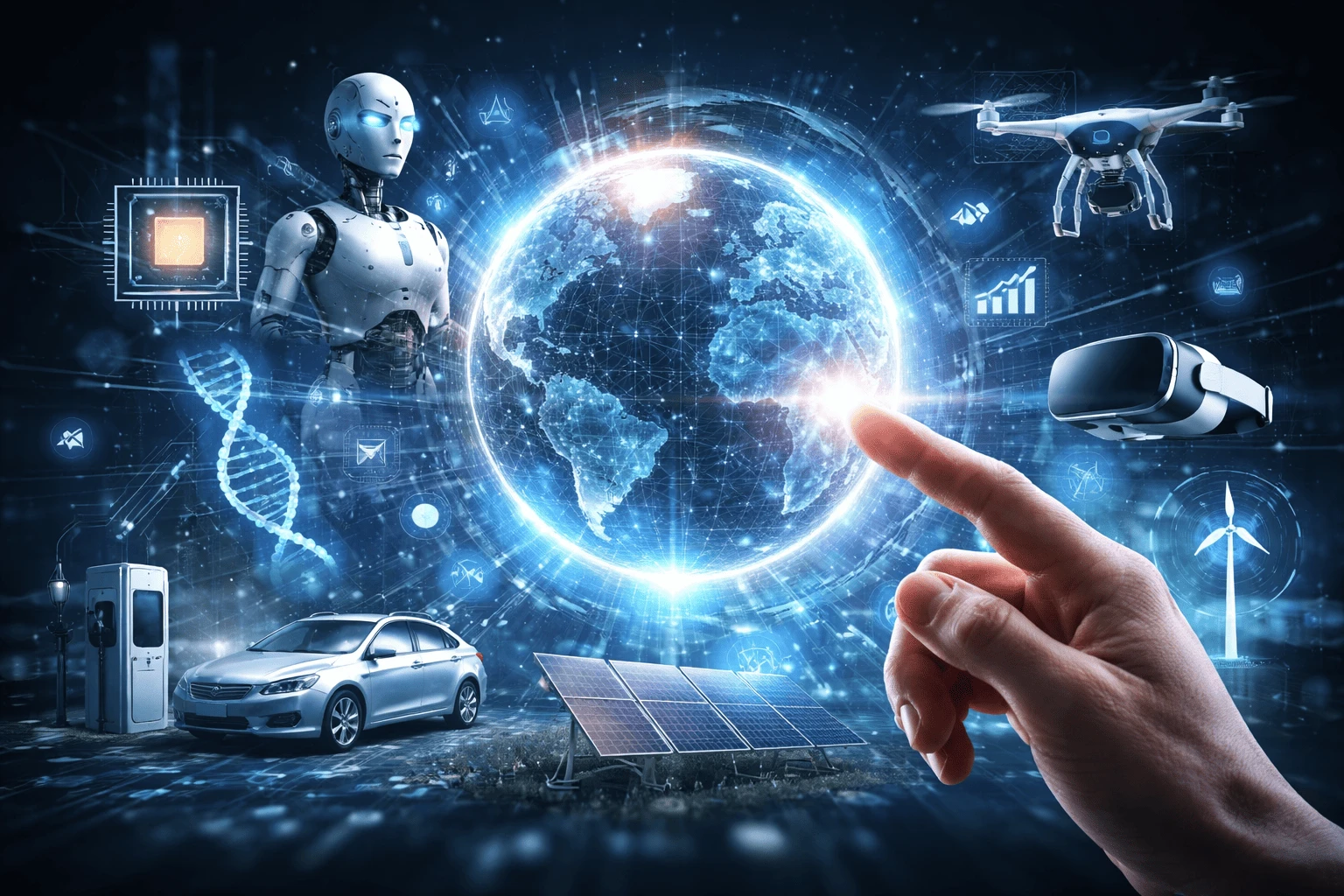
Technology has always shaped the way people live, work, and connect, but the speed of change today feels faster than ever before. What once sounded like science fiction is now becoming part of everyday life. From smart assistants that answer questions in seconds to machines that can learn, predict, and even create, we are entering a period where innovation will influence nearly every part of society. Over the next decade, emerging technologies will not just improve existing systems. They will redefine industries, transform business models, and change how people solve problems in health, education, finance, transport, and communication.
The most exciting part is that these future technology trends are not limited to large tech companies in Silicon Valley. Startups, researchers, governments, and businesses around the world, including in places like the UK and Pakistan, are also investing in technologies shaping the future. This means the next wave of change will be more global, more practical, and more connected to real human needs. At the same time, these innovations will bring challenges such as privacy concerns, job shifts, and ethical questions that society must be ready to face.
In this blog, we will explore the top emerging technologies that are likely to define the next decade, why they matter, and how they may affect both businesses and everyday life. Understanding the future of technology now can help individuals and organizations stay ready for what comes next.
The next decade will be driven by technologies that not only improve efficiency but also change how industries operate. These emerging technologies are already being tested and adopted around the world. As they continue to evolve, they will influence everything from healthcare and finance to transportation and communication. Businesses that understand and adapt to these technologies early will have a major advantage in the future.
Let’s explore some of the most powerful innovations shaping the future of technology.
Artificial Intelligence (AI) is one of the most important emerging technologies of our time. AI refers to machines and systems that can analyze data, learn patterns, and make decisions with minimal human intervention. Over the next decade, AI will become even more integrated into everyday life.
For example, AI is already transforming healthcare by helping doctors detect diseases earlier through advanced medical imaging and predictive analytics. In finance, AI systems can analyze massive amounts of market data in seconds, helping investors make smarter decisions. Customer service has also changed significantly with AI-powered chatbots that provide instant support to users.
Automation, powered by AI, is also reshaping the workplace. Tasks that once required manual effort can now be performed by intelligent machines and software. While this may change certain job roles, it also creates new opportunities in fields like AI development, data science, and robotics.
Countries such as the United Kingdom are investing heavily in AI research and innovation, while startups in developing tech ecosystems like Pakistan are also exploring AI solutions for healthcare, fintech, and agriculture.
Quantum computing is another revolutionary technology that could dramatically change how we solve complex problems. Unlike traditional computers that process information using bits (0s and 1s), quantum computers use quantum bits, or qubits, which allow them to perform multiple calculations at once.
This means quantum computers could solve problems that would take traditional computers thousands of years to complete. Industries such as pharmaceutical research, climate modeling, and financial forecasting could benefit greatly from this capability.
For example, pharmaceutical companies may use quantum computing to simulate complex molecular interactions and discover new medicines much faster than current methods allow. In cybersecurity, quantum computing could both challenge and improve current encryption technologies.
Although quantum computing is still in its early stages, major technology companies and research institutions around the world are investing billions into its development. Over the next decade, we may begin to see practical applications emerge.
The Internet of Things (IoT) refers to a network of connected devices that collect and exchange data through the internet. These devices include smart home systems, wearable fitness trackers, connected vehicles, and industrial sensors.
IoT is already transforming how people interact with technology in daily life. For example, smart homes allow users to control lighting, security systems, and appliances through mobile apps or voice assistants. In cities, IoT technology helps manage traffic systems, monitor pollution levels, and improve public services.
In industries, IoT plays a key role in improving efficiency and reducing operational costs. Manufacturing companies use connected sensors to monitor equipment performance and prevent unexpected breakdowns. Logistics companies track shipments in real time to improve supply chain management.
As 5G and future connectivity technologies expand, IoT devices will become even faster and more reliable. This will lead to smarter cities, more efficient industries, and better data-driven decision-making.
While some technologies are improving current systems, others are creating completely new ways for people and businesses to interact, trade, learn, and solve global problems. These next-generation innovations are likely to have a strong influence over the coming years because they go beyond convenience. They bring new business models, new customer experiences, and new solutions to long-standing challenges. From secure digital transactions to immersive digital environments and cleaner energy systems, these technologies shaping the future are becoming impossible to ignore.
Blockchain technology is often linked with cryptocurrency, but its potential goes far beyond digital coins. At its core, blockchain is a secure and transparent digital record system that makes it difficult to change or fake data. This makes it useful in many industries where trust, security, and traceability matter.
In finance, blockchain can make payments faster, safer, and more transparent. In supply chains, businesses can use it to track products from the source to the customer, which helps improve trust and reduce fraud. It can also play an important role in digital identity systems, smart contracts, and secure record-keeping.
Over the next decade, blockchain technology may become more common in government services, healthcare records, and cross-border business transactions. For countries working on digital transformation, including Pakistan and the UK, blockchain could support more secure systems and reduce inefficiencies in both public and private sectors.
Augmented Reality and Virtual Reality are changing how people experience digital content. AR adds digital elements to the real world, while VR creates a fully immersive digital environment. These technologies were once seen mainly as entertainment tools, but today they are being used in education, healthcare, retail, and workplace training.
In education, AR and VR can help students understand complex topics through visual and interactive learning. In medicine, doctors and trainees can practice procedures in virtual simulations before working with real patients. In retail, brands are using AR to let customers try products virtually, such as furniture in their homes or glasses on their faces.
Businesses are also using VR for staff training, especially in industries where real-world practice can be expensive or risky. As the hardware becomes more affordable and user-friendly, AR and VR are expected to become a bigger part of daily life and business operations in the next decade.
Green technology will be one of the most important areas of innovation in the years ahead. As climate concerns grow, businesses, governments, and consumers are all looking for smarter and cleaner solutions. Sustainable technologies focus on reducing environmental harm while improving efficiency and long-term growth.
This includes renewable energy systems, electric vehicles, smart energy grids, carbon capture solutions, and eco-friendly manufacturing methods. For example, solar and wind energy technologies are becoming more efficient and affordable. Electric vehicles are gaining popularity as battery technology improves and charging infrastructure expands. Smart grids can also help manage electricity more effectively, reducing waste and supporting cleaner energy use.
Over the next decade, green technology will not only support environmental goals but also create new business opportunities and jobs. Countries that invest early in clean innovation are likely to gain both economic and social benefits. For businesses, adopting sustainable technology may soon become less of a choice and more of a necessity.
Technology has always played a powerful role in shaping human progress, but the next decade may bring some of the most significant transformations we have ever seen. Emerging technologies like artificial intelligence, quantum computing, the Internet of Things, blockchain, immersive realities, and sustainable innovations are not just improving existing systems — they are creating entirely new possibilities for businesses, governments, and everyday life.
Artificial intelligence and automation will continue to help organizations make smarter decisions and improve productivity. Quantum computing may unlock solutions to complex scientific and financial challenges. Meanwhile, connected ecosystems powered by IoT will make homes, cities, and industries more efficient and responsive. At the same time, technologies like blockchain will bring more transparency and security to digital systems, while AR and VR will reshape how people learn, shop, and interact with digital environments.
Perhaps one of the most important developments will be the rise of green and sustainable technologies. As the world faces environmental challenges, innovation in clean energy, smart infrastructure, and eco-friendly solutions will play a major role in building a more sustainable future.
For individuals, staying informed about future technology trends will be essential for career growth and adaptability. For businesses and entrepreneurs, the key will be to embrace innovation early, invest in digital transformation, and remain open to new opportunities created by these technological shifts.
The future is being built today. Those who understand and prepare for these emerging technologies will be better positioned to thrive in the rapidly evolving digital world.

Hi, I’m Ahmed, a professional content writer and SEO specialist. I help businesses, brands, and websites create clear, engaging, and search-friendly content that attracts the right audience and drives results.
With a strong understanding of SEO, keyword research, blog writing, website content, and content strategy, I craft content that is not only well-written but also optimized to perform on search engines. My goal is to turn ideas into powerful words that build trust, improve visibility, and support business growth.
Whether you need blog posts, website copy, product descriptions, SEO articles, or content optimization, I can help create content that connects with readers and supports your online goals.
The real reason why personalization fails in marketing isn’t that marketers lack ideas. It usu
15 September 2026
The success of any event depends on more than just a great venue and a well-planned schedule. Behind
3 August 2026
If you examine the current professional landscape, you will notice a stark, fascinating division wit
3 July 2026
Be the first to share your thoughts
No comments yet. Be the first to comment!
Share your thoughts and join the discussion below.